Designing Levels for Getaway Golf
A good Getaway Golf level should feel like a heist plan. You study the room. You spot the gaps. You time your move. And when you thread Ball-E through a corridor of overlapping camera cones without getting caught, that's the moment that makes the whole thing worth it.
Here's how the levels are built.
Teach, Then Test
Every mechanic gets introduced in isolation before it shows up in combination. Level 1 is just doors and switches. Learn how the ball moves, learn that switches toggle things. No pressure, no timer, no guards staring you down.
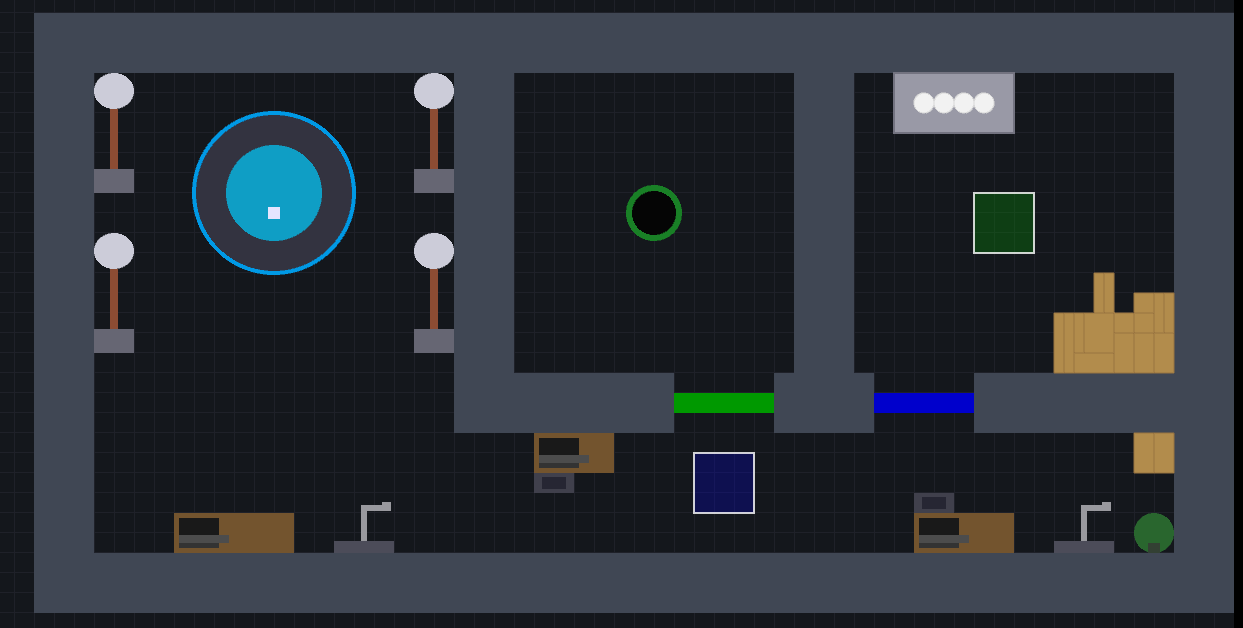
By the time cameras show up, you already understand the space. By the time lasers appear, you already understand timing. Each level adds exactly one new idea on top of what you've already learned. The complexity comes from combination, not from dumping mechanics on the player all at once.
The Toolkit
Every level is assembled from a small set of building blocks:
- Walls and rooms: the floorplan. Where can Ball-E go? Where can't it?
- Doors and switches: color-coded pairs. Hit the green switch, the green door opens. Simple cause and effect.
- Guards: patrol routes with vision cones. They see you, it's over. Their routes are predictable, so you can learn the pattern.
- Security cameras: stationary or sweeping. Wider vision cones than guards, but they don't move. The trick is timing.
- Laser tripwires: red lines between sensors. Some are static, some pulse on and off. Thread the needle.
That's it. Five building blocks. Every level in the game is some arrangement of these five things. The depth comes from how they interact.
Layering Danger
The real design work is in overlap. A camera alone is easy: wait for it to sweep, then move. A camera plus a guard patrol that covers the camera's blind spot? Now you're solving a real problem. You need to find the window where both are looking away, and you need to be fast enough to clear the zone before either one turns back.
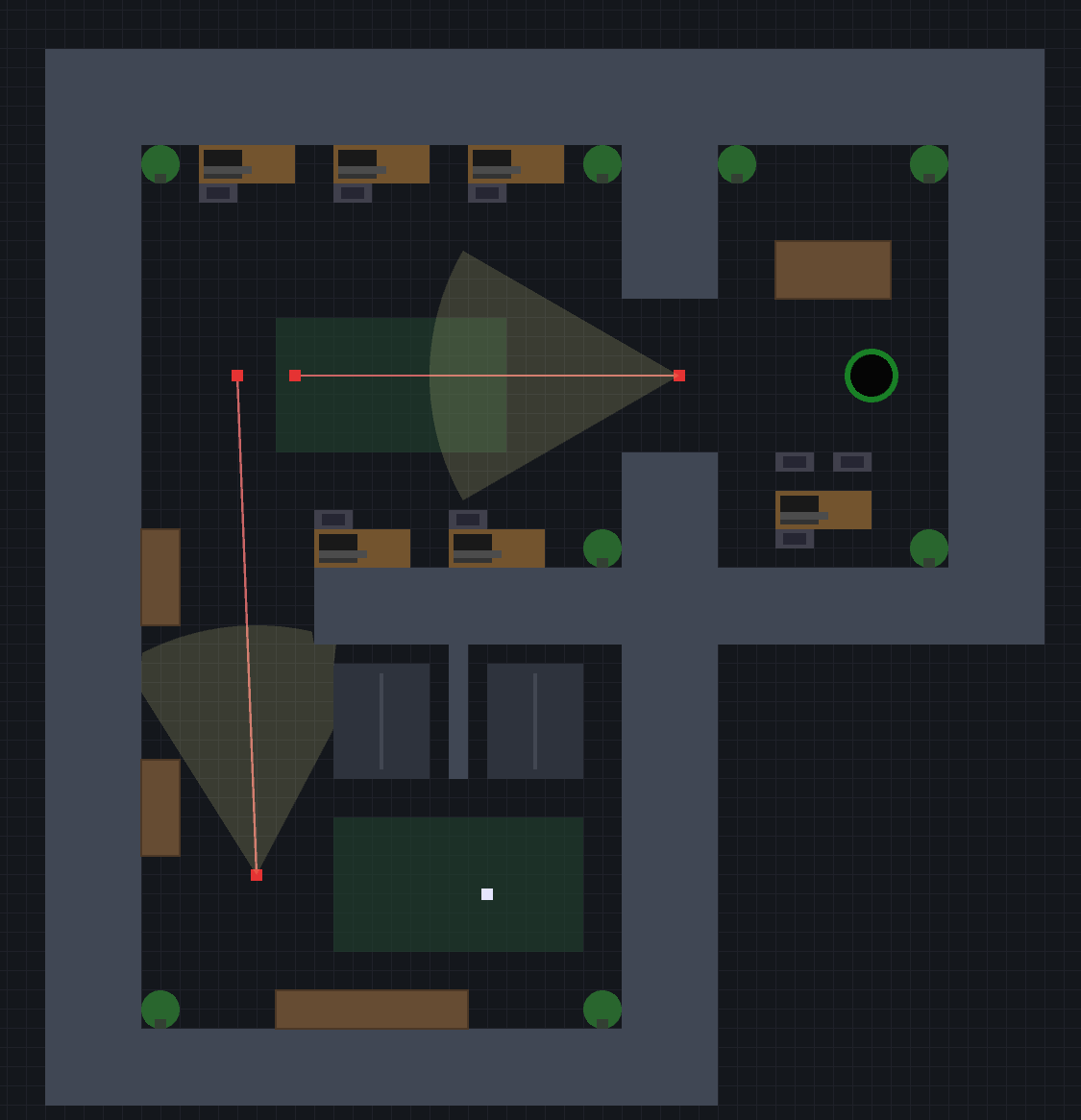
The best levels have what I think of as a "rhythm." The cameras sweep, the lasers pulse, the guards walk their routes, and somewhere in that choreography there's a gap. Finding it feels less like solving a puzzle and more like reading a piece of music.
The Gauntlet
Some levels are designed to make you sweat. Level 9 is a corridor. A long, narrow hallway lined with cameras on both sides, their cones overlapping so there's almost no safe space at any given moment. Laser tripwires gate each section. There is one path through, and the timing window is tight.
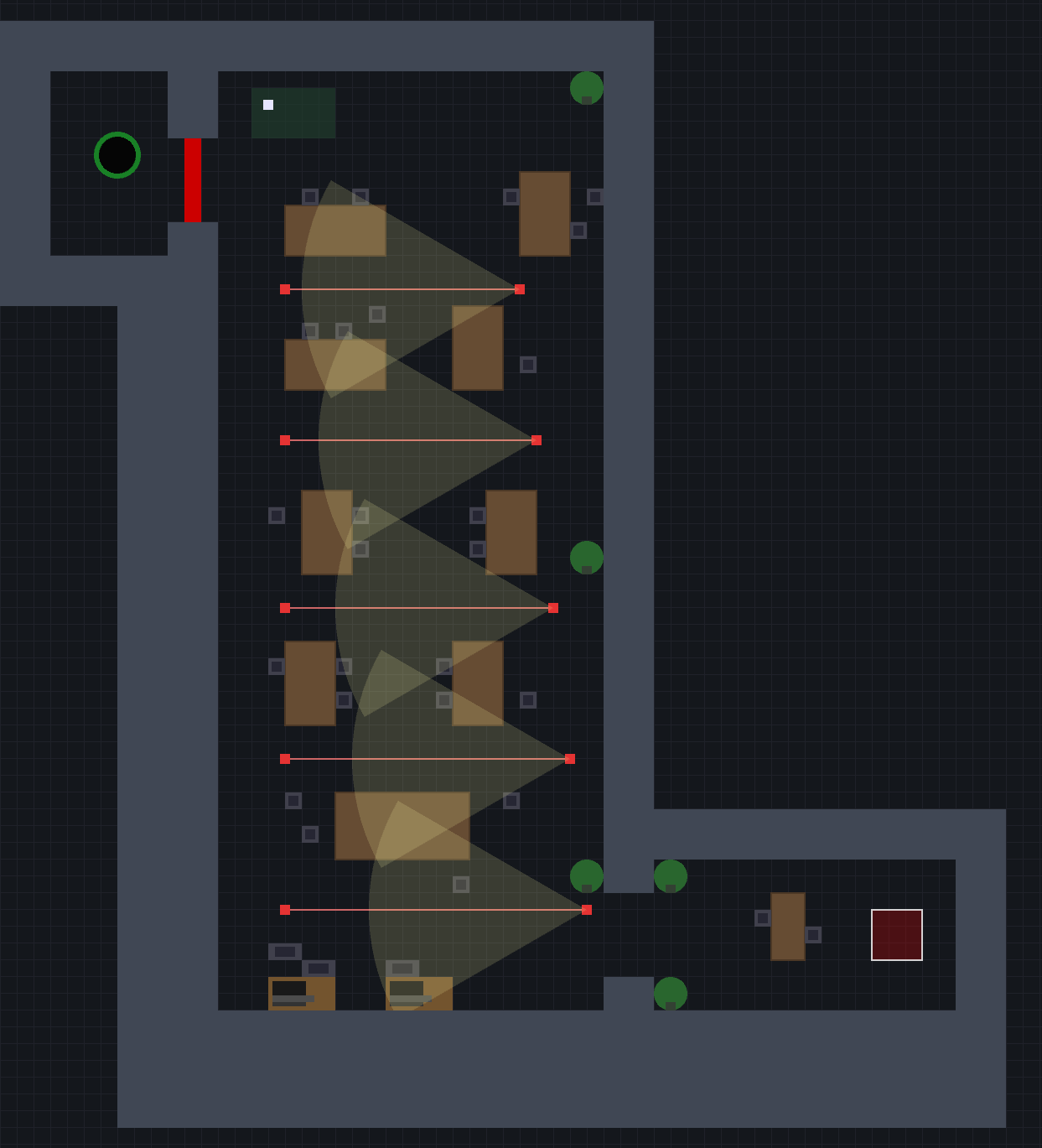
These levels aren't about new mechanics. They're about mastery. By the time you reach a gauntlet level, you know every tool in the game. The question isn't "what does this do?" It's "can I actually pull this off?"
Big Rooms, Many Solutions
The later levels open up. Instead of corridors, you get sprawling multi-room layouts with multiple paths. Color-coded doors create branching routes. Do you go through the green door first, or loop around through the office wing? Both paths are valid. Both have different security setups.
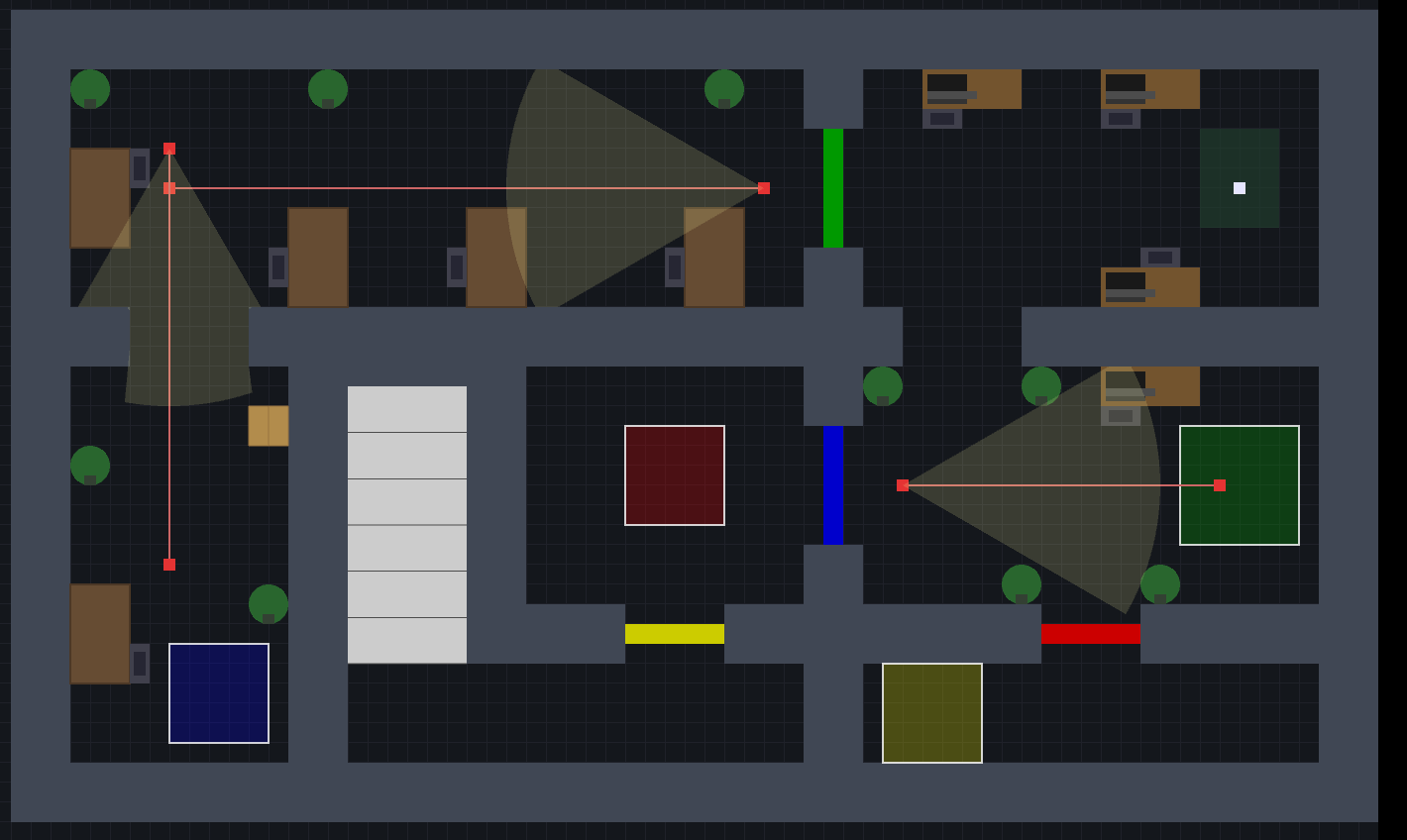
These levels reward exploration. The "obvious" path through the front door might have heavier security than the side entrance through the supply closet. Players who take a moment to study the layout before moving tend to find cleaner routes and faster times.
Built to Replay
Every level has a time element. You can take it slow, study every pattern, and inch through. But the real satisfaction comes from going fast. Once you've learned a level, you start optimizing. Shaving seconds. Finding the line that threads three camera cones in one smooth motion instead of stopping and waiting between each one.
That's the design philosophy in one sentence: easy to complete, hard to master. The first time through is a puzzle. The tenth time through is a speedrun.