From Pygame to the App Store: How Getaway Golf Was Born
Every game starts somewhere. For Getaway Golf, it started with a Pygame script and a simple question: what if golf was a heist? Before Ball-E had a name or an origin story, it was just a cyan circle on a dark background.
The Pygame Prototype
The first version of Getaway Golf was nothing fancy. A Python script using Pygame, the kind of thing you'd write in an afternoon to test an idea. A ball. Some walls. A hole. The entire "game" was a top-down puzzle where you'd navigate a golf ball through rooms, flipping switches to open doors and reach the exit.
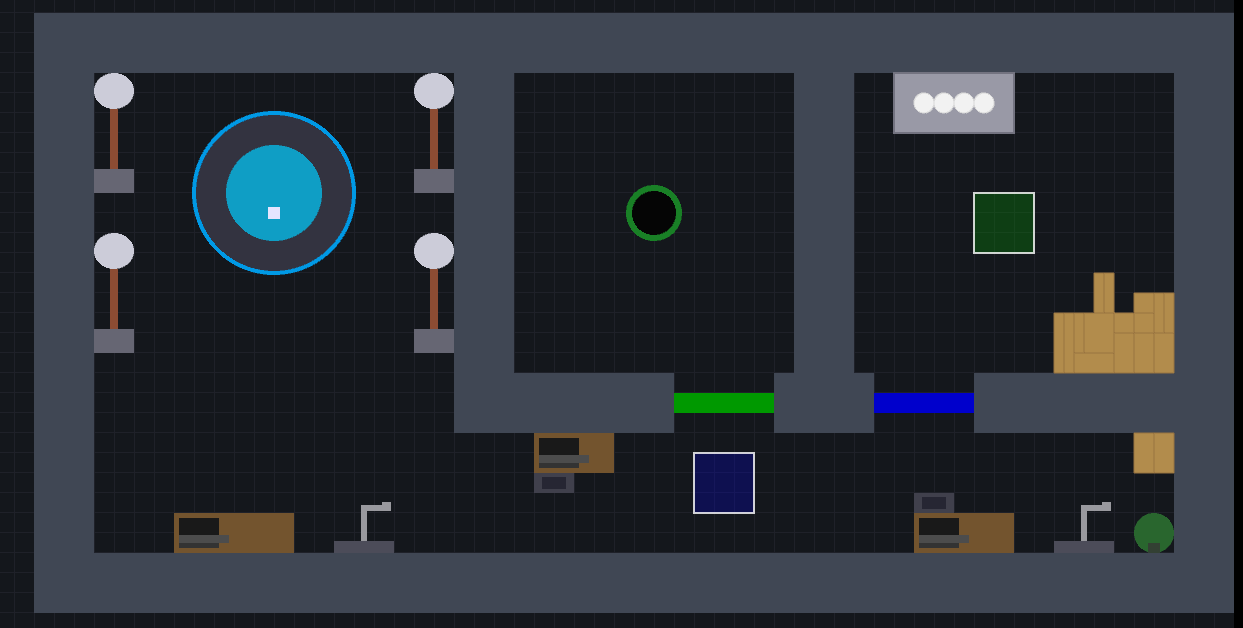
There were no guards. No cameras. No lasers. Just a ball and rooms. But even in that bare-bones prototype, something clicked. The satisfaction of navigating through tight spaces, the puzzle of figuring out which switch opens which door... it had a feel to it. That feeling was worth chasing.
Adding the Stealth
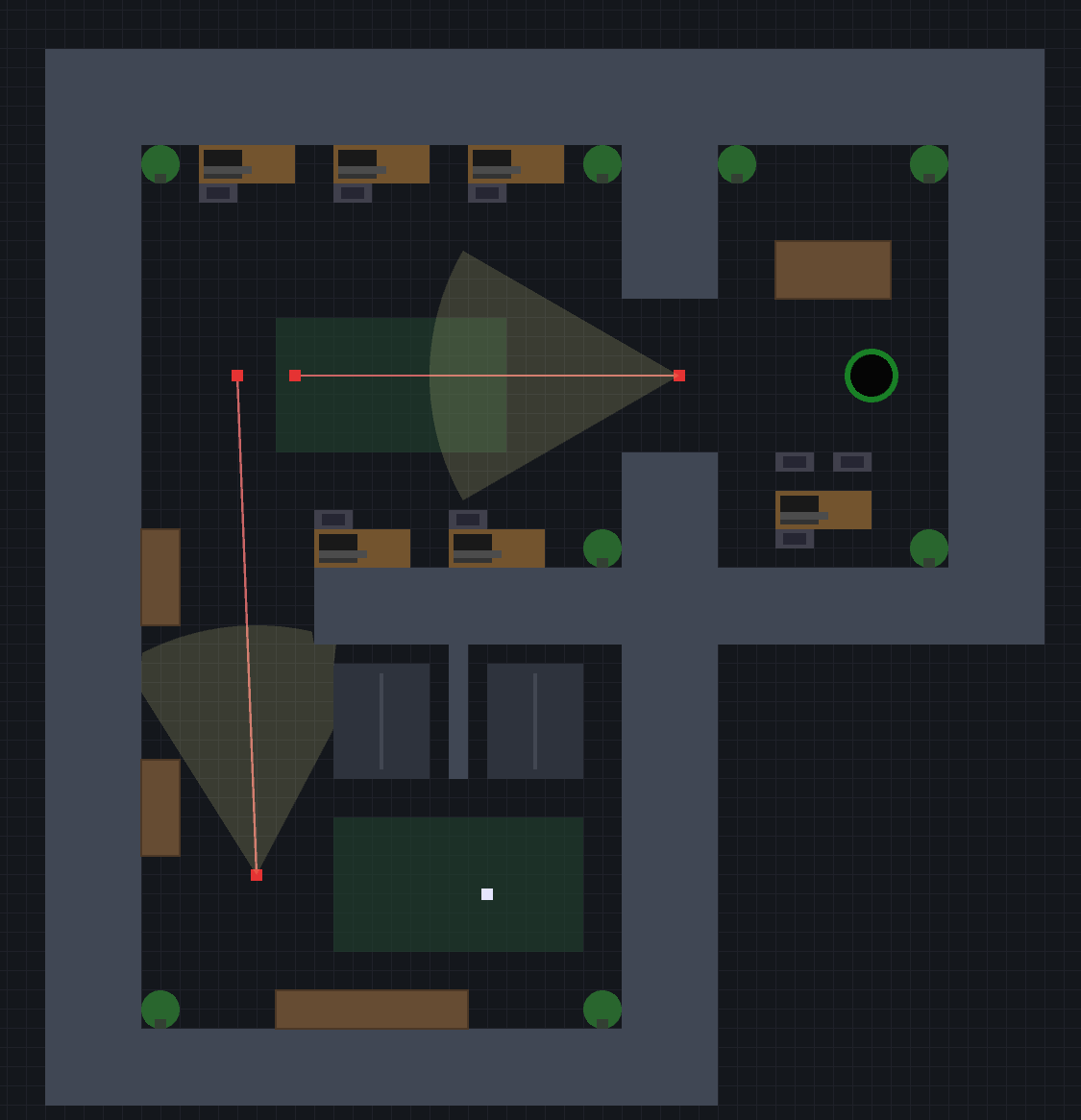
The breakthrough came when guards entered the picture. What if the rooms weren't just puzzles, but actually dangerous? The first guard was a green circle with a vision cone. Simple as it gets. But suddenly the game had tension. You weren't just solving a puzzle anymore. You were sneaking.
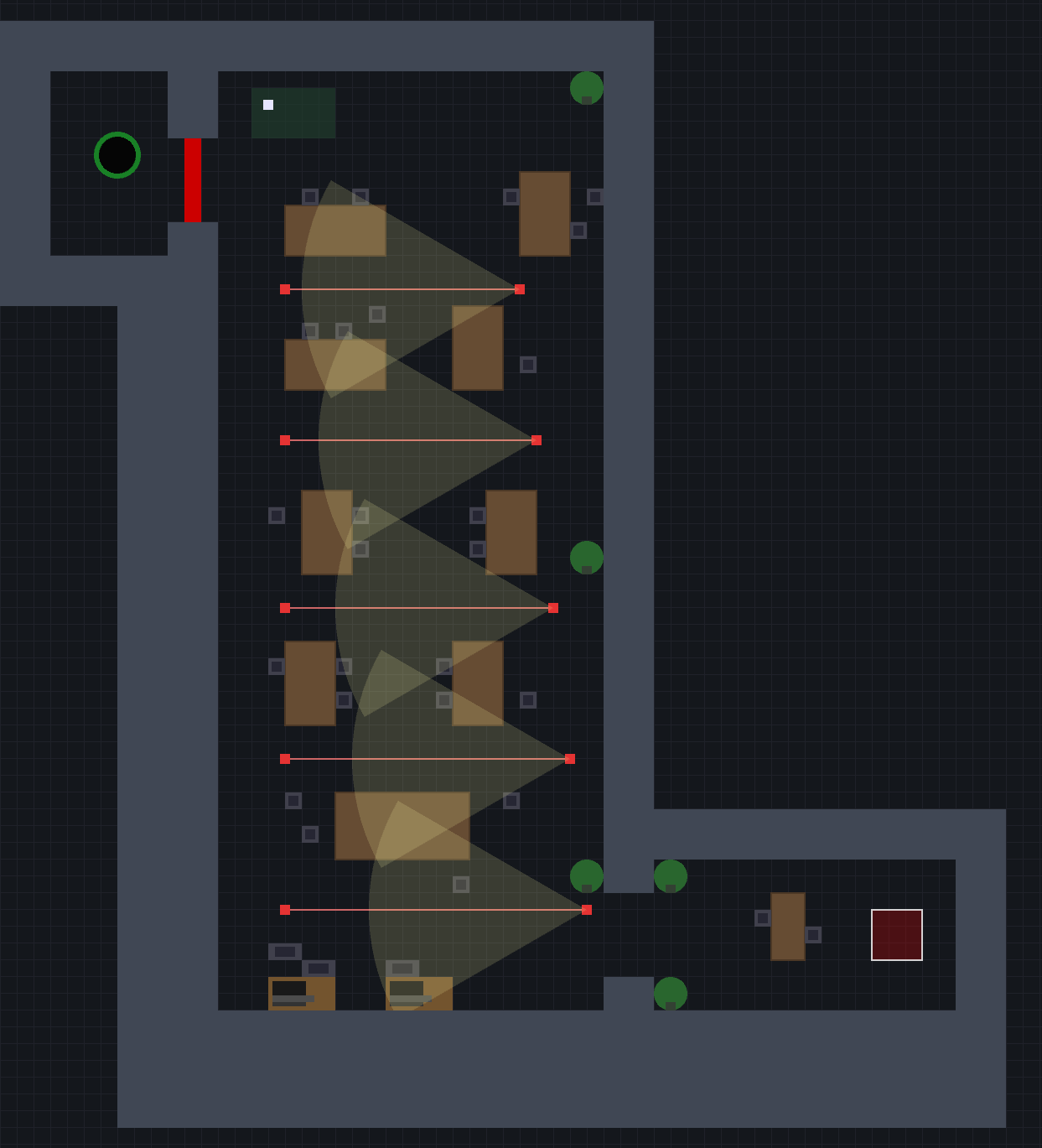
Then came security cameras, scanning back and forth across hallways. Then laser tripwires, red lines stretching between sensors that you had to time your way through. Each new mechanic layered on top of the last, turning a simple ball-in-a-maze game into something that felt like a top-down heist movie.
The Level Editor Problem
Building levels by hand in code got old fast. Coordinates, wall positions, guard patrol routes, all hardcoded in Python dictionaries. Making one small change meant rerunning the script and eyeballing whether things lined up. So a level editor was the natural next step.
The editor that emerged was still Pygame. Click to place walls, drag to set patrol routes, test instantly. It's the same tool that built every level in the game. What you see in those screenshots is the editor view: the grid, the vision cones, the red laser lines. Every level was designed, tested, and iterated on in this environment.
From Python to a Real Game
At some point, the prototype stopped being a prototype. The mechanics were solid. The levels were fun. The question shifted from "does this idea work?" to "can this be a real game?"
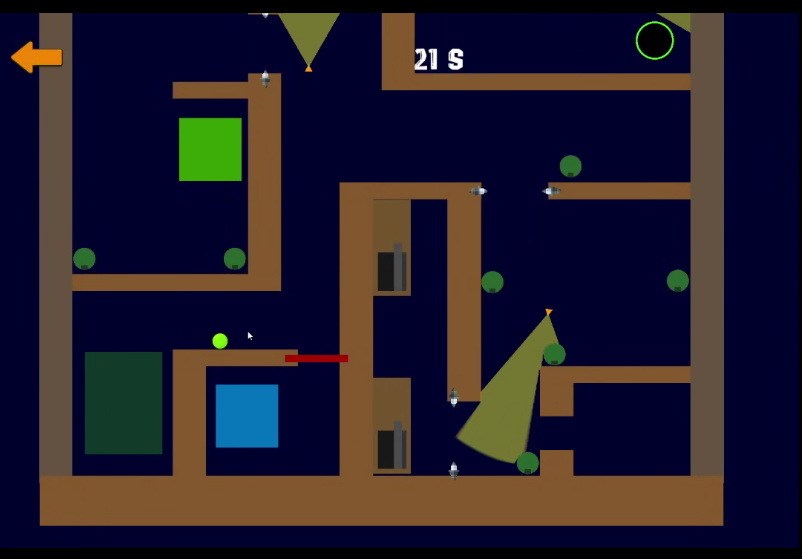
The jump from Pygame to a shippable product meant rebuilding with proper game engine tooling, adding polish (art, sound, animations, menus) and designing a difficulty curve that teaches players the mechanics without holding their hand. The core idea never changed, though. You're still a golf ball. You're still sneaking through rooms. You're still making your getaway.
Ship It
Getaway Golf launched on iOS and Steam in 2025. What started as a Pygame script, a "what if" that took an afternoon to prototype, became a full game with dozens of levels, security systems, and a sentient golf ball named Ball-E with an attitude and a reason to run.
The lesson? Prototype fast. If the core loop feels good in Pygame with colored circles and rectangles, it'll feel even better with polish on top. Don't wait for perfect. Start with pygame.init().